Showing posts with label homeschool. Show all posts

Friday, September 6

Physics: week 1 (Scientific Method)

The goal for this week was to learn how to properly use the Scientific Method and to create good Science Journals.


We began the week with some easy experiments from Super Charged Science. The first was to see how many drops of water could fit on a penny. We discussed changing variables and tried using cold pennies and hot pennies, clean pennies and dirty pennies. It was interesting and easy and made a great introduction for documenting an experiment.

We covered pendulums and weights and some other easy experiments before tackling our big project of the week: a linear accelerator. I told my husband, Chris that we were about to build a Gauss Rifle and he was downright giddy with excitement. I let him take over for that one since he was so eager.

I sweep daily. I really do.
The boys used a lot of initiative for this project and I was really proud of all of them.

We like to incorporate God's Holy Word in our homeschool as much as possible.
  I loved watching their eyebrows furrow and their minds whir as they wondered and tweaked and figured things out.
 
Once the assigned project was over, they wanted to keep trying out new ideas. How far could it shoot? Farther than my living room. We tried the church gym. Farther than that. We tried the parking lot. It was hot and rough asphalt, so our marble only traveled about a foot. This made more interesting discussion.

Science and boys' brains. Such a beautiful combination!

Here is a video of Chris demonstrating the sample Gauss Rifle that he built and tested before the boys did their experiment:



Posted by Picasa

Tuesday, September 3

First Day of School


Joel is so proud that he can no longer stand up tall under the mantle!


Gracie can brush all of that hair by herself, and rarely gets jelly in it this year.


Honor is still a butterfly ballerina mermaid princess.


And a goofball.

Ethan is all manly and serious.


Well, he tries.

It was a beautiful day with a scavenger hunt and buttermilk blueberry coffeecake. They filled out their first day of school pages, with a record of their signatures, their height, their goals, etc. It is always interesting to compare these to last year's pages.

We went over new books, but we did no new bookwork.

All in all, a perfect first day.

Monday, May 20

Review of College Prep Genius

 photo CPG-logo-main_zps66938827.jpgEthan is entering the last few years of school and is beginning to prepare for college, exploring his options. It's a bit scary, in all honesty. I planned out the rest of his school career so carefully, but these last few years terrify me more than teaching him to read ever did. Multiplication tables? That's nothing. With those basics, you always have a reassurance that at some point, they will get it. They will potty train before they go to college. But will they be ready for college before they go to college? Will they take the right classes and pass the right tests to get into the college that is the best fit for them? How do we find out which college is the best fit for him? How do we pay for it? These questions aren't as easy to deal with.

 photo Untitled-1_zpsac2e8af4.jpgI've been blessed this last year with access to some great vendors, who understand this pressure and have helped me navigate my way through the many options. Recently, I've had the opportunity to review the book "High School Prep Genius" It is an "Academic Guide to Excellence" provided by College Prep Genius. 

The book is designed to be read by a parent and student, working through it together. It is written toward students with a section written to parents at the end of each chapter. But it's helpful to just read it all. There are homework assignments for both parents and students. The reading portions and the activities include everything from preparing a transcript to essay writing techniques and study tips. It is an excellent resource for fully preparing for those last years of high school.

There are 18 chapters in the book, plus a very necessary introduction section. It is a good fit to work through a chapter per week, which takes about an hour per week, reading and discussing together. Another option might be to double up on that schedule and work through it during the summer months.

I wish I had heard of this book before we hit the high school years. It is still extremely helpful, but it would have been a natural and easy process had I started when my son was in the 7th grade. Thankfully, I will be able to start it with his younger siblings and will be ahead of the game.

The 18 chapters and the intro are are divided into 4 sections. Section I is the introduction, which is imperative and sets the foundation for the rest of the process. The other sections are:

II. Foundation for Personal Success
This section equips students very personally, from financial decisions to healthy eating to healthy friendships. I love that the book emphasizes that the goal is not just to get into college, but it is to develop into an effective member of society. This section helps students stand back and examine their own personal development and integrity and to see how their choices affect what kind of person they become and how they live.

III. Foundation for Academic Success
This section prepares the student for effective study skills and test taking. It helps them find an organization routine that can see them through to the end. This helps them map out the high school years and, as the title of chapter 12 says, helps them excel in "Going Beyond the Basics". \

IV. Foundation for Future Success
This section gets into the nitty gritty of college choices. It walks students through choosing a school, preparing for ACT/SAT, maneuvering through college applications, and how to pay for school. Chapter 18 walks them through college, beginning with the summer before and choosing housing and classes, living with a roommate, handling homesickness. It covers internships, professors, what to pack...everything.

The Appendix includes detailed information how to build a transcript, with sample forms. I also includes lots of information on talent searches, which was completely new to me. It has an excellent "Great Books" list for planning literature courses, relaxation techniques for students that get anxious about tests (or parents who get anxious about students....), and an admissions terminology list to help you translate the lingo.

The book has been a weight off of my shoulders. Working through it with your child will have you well-armed and ready to tackle the high school to college path.  The book can be purchased for $29.95. For other reviews and thoughts from other crew members, be sure to visit the Schoolhouse Review Crew linked below:

Photobucket

Monday, April 22

Progeny Press Review

Teaching methods are varied and different styles ebb and flow in popularity. Most homeschooling methods tend to agree that good literature is integral to a quality education. My family began with a classical education as described in The Well-Trained Mind. Every year, I've embraced a little bit more of a Charlotte Mason education philosophy, but the two methods aren't really at odds with one another after students enter the logic stage. Both methods encourage narrating literature back to mom after it has been read. Discussion about literature helps flesh out themes and build reading comprehension skills. This is more fun,and much more helpful than filling out a worksheet at the end of each chapter. However, I can only help my students analyze literature at the level that I am able to analyze literature. Much as I love reading, I am not confident in my literary analysis skills. Because of this, I really appreciate guides to accompany our reading assignments. Progeny Press has created the best guides I have seen.

 photo 26018_10150154187290243_4120345_n_zpsd9393f12.jpg
The creators of Progeny Press are Christian homeschooling parents who created these guides with their own children in mind as they began to study classic literature. The guides "concentrate on critical thinking, comprehension, literary analysis, and Christian application. I reviewed two of their guides last year, and my high opinion hasn't diminished in the least.

This year, we added the Treasure Island Study Guide to our lineup. My 13 year old occasionally found last year's guide to be tiring. He didn't like going back to look over paragraphs he had already read. But he did see the benefit in it and has embraced this year's guide more enthusiastically. 
 photo a64739513876c78eaae8f5_m_zpsc345c325.jpgWe received the Treasure Island Study Guide as a downloadable PDF. This is an interactive study guide that allows students to type directly onto the worksheets. This is a great option for students who think they're allergic to writing. It also saves on the cost of printing. The guide can also be sent to an e-reader, such as a Kindle. You can't type in it this way, but it is a great method if you plan to work through the guide verbally with your student.

It is intended for grades 7-10 and I found this to be a fair assessment. Certainly, older and younger students could also enjoy it. It is written toward the student, but parents could use the guide to facilitate narrations and discussions instead. Done this way, and with an audio book or reading aloud, the entire family could benefit.  

The guide covers around 3 chapters at a time, rather than chapter-by-chapter. This allowed my 8th grader to get into the book a bit more without approaching it with a clinical eye. However, Joel loved the story so much, that he kept forgetting to stop at the end of his assigned chapter. He didn't want to put the book down. The guide suggests reading the entire book before beginning the study and then working through it again with the guide. Now I understand why.

The guide is divided into 6 sections to cover the 34 chapters of the book. It takes around 8-12 weeks to complete the entire guide. Each section includes:
  • Vocabulary
  • Comprehension Questions
  • Thinking Questions
  • Digging Deeper

The Vocabulary portion covers vocabulary words from each chapter. There around a dozen vocabulary words for each section. The activities vary from lesson to lesson, but include fill-in-the-blank, matching, multiple choice, etc.

The Comprehension and Thinking section contains questions to help students and parents realize how much the students gathered from the book. It also prompts them to think a bit more about what they read, examining motives of characters and possible outcomes. There are about a half-dozen Comprehension questions. These are standard questions, such as, "Why does Tom refuse to join Silver?" and "Why does Jim sneak away?" The Thinking questions take it a bit deeper. There are about a half dozen of these per section. These require students to consider what they've read and draw conclusions. These questions include, "What is ironic about Hands' outlook on "good," considering his past and present circumstances? Explain how this is also dramatic irony." Another question is "In your opinion, was Israel Hands' death a form of poetic justice? Why or why not?" A beautiful aspect that I truly appreciate is that irony and poetic justice are explained to students before these questions are asked. It is not just a book of questions and quizzes.  

The Digging Deeper section views selections from the book through the lens of scripture and helps students glean some practical application lessons. For example: "Jim's first view of the island is one of dread and discouragement, and the fear becomes stronger when he sees Silver murder a man. Read Deuteronomy 31:6; Lamentations 3:21-24; and Romans 8:35-39. In what way do these verses teach us to handle fear and discouragement?" There are 1-3 Digging Deep questions per section.

The guide begins with 8 pre-reading activities, which contain interesting things to research before reading the book. Some are quite helpful, such as researching the value of coins used during the time of the story. Some were less helpful, such as choosing a design of ship to draw. This did require investigating the ships on the list, which was helpful to the story, but drawing isn't something everyone wants to make time for outside of art class. We opted to look up the ships online and skip the drawing. 


The guide ends with an Overview section. It teaches students about themes and dramatic structure and asks 8 excellent questions. This section also provides several options for essay assignments. There are also suggestions for other resources students might find interesting. 

Overall, I love the guide. I can't think of anything I would change. I plan to continue using one guide per year to help strengthen my student's ability to really appreciate what he is reading. If desired, students can complete 4 of the guides to earn a full high school credit. 

There are 107 guides available for all ages and readers. The downloadable ebooks also comes with an answer guide for parents. The prices vary, but our Treasure Island Guide sells for $16.99 for an instant download or CD, which can be used again and again for multiple students. It costs $18.99 for a printed copy. 


Photobucket


Tuesday, October 16

Dayspring's Pilgrim Story

Dayspring is a Christian Academy that utilizes the Principle Approach to learning, teaching a biblical worldview and educating students in the history of an America based on Christian values, relying predominantly on primary sources. They offer several online courses and I had the opportunity to review The Pilgrim Story. The timing couldn't have been more perfect. It fit right into our history studies' timeline and will be finished in plenty of time for Thanksgiving!

Wednesday, September 12

Math911


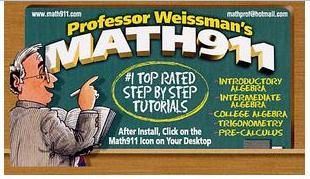
Math911 is an Introductory Algebra program that you can instantly download to your computer. At the moment, it is available for free. It's Algebra and it's free. This is a great combination of words for a homeschooling Mama.

According to Professor Weissman, "Math911 is for students who believe that Algebra must be a struggle, difficult and complicated. Math911 is the easiest and most economical solution for Algebra students. The Math911 approach is what learning Algebra should be: quick, fun, and easy. Math911 will let you absorb Algebra effortlessly."


Absorb seems to be the actual way students are expected to learn Algebra with this program, at least to me. Math911 uses what is called a Mastery Learning approach to teach math. While this method is not a good fit for me, I know that many students have great success with it. Mastery Learning simply means that a student continues to try for the right answer until they "get it". Wrong answers don't count; students just keep trying until it clicks. For some students, this takes the pressure off and they don't have to worry about getting the wrong answer, they get to figure the right answer out for themselves. For students like me, this method means that they might eventually figure out the method of how to get the right answer, but won't necessarily understand WHY the method works.

In addition to the Introductory Algebra Program, math911 has a Premium version that you can purchase for $49.95. This premium version includes Intermediate Algebra, College Algebra, Trigonometry, Pre-Calculus, and Statistics. Every level of math that you'll ever need for $49.95 is a very good deal, if the program is a good fit for your student.

The Premium version includes free upgrades and technical support. Professor Weissman is very quick to respond to questions. Students have a running time clock that shows how much time they've spent in the lessons. It includes periodic testing and keeps track of grades for you. Students are scored on how much of the program they've completed, not on number of problems missed. You can also have multiple accounts for multiple students (including mom and dad if you're so inclined.)


The graphics are very dated. I'm a fan of simplicity and prefer to not have flashy graphics in a math program. As simple as the graphics are though, it still feels very busy to me. To work a problem, your eye has to travel the page. If you look at the graphic below, you'll see that the problem is listed near the top: "- 2 or - 9". The answer box is then in the middle of the screen, at the left. And then the instructions for what to do with the problem are located at the bottom of the screen. 


Much of the program is intuitive. There is not a lesson that explains how something works and then gives you sample problems to try. It begins immediately with a problem and you figure it out. If you get the wrong answer, you can click on a green box on the right that says "See Solution". This will give you the answer. If you are still unable to see how to arrive at the right answer, you can click on "See all the Steps". There is no textbook, but Professor Weissman insists it is not necessary. This is not a drill program; it is intended to be complete.


I tried entering a few problems incorrectly on purpose. For the problem " - ( + 2 ) " I entered, "2". When it marked it wrong, I clicked on "See All the Steps". And it gave me " - ( + 2 ) = - 2 " And the explanation at the bottom of the screen said "The opposite of a number in parenthesis is the number in parenthesis with the opposite sign." If that sounds helpful to you, you will probably really enjoy this program. For me, had I not known how to simplify the problem, reading about the "opposite of a number" would not help me understand the concept of positive and negative symbols.

Each student is different and it really is something you would want to try first to see if it was a good fit. For one of my sons, this method is perfect. If he figures it out on his own, he "owns" it through and through. However, the layout is not appealing to him and the "ding" sound that goes off each time you submit an answer is annoying, so it's still not a good fit for him. To get a feel for the program, you can download the complete Algebra Course for free right now as a back-to-school special offer. It is an instant download and easy to install, letting you know whether or not it's a good fit for your student.

The program can be shared on a network if you have multiple students and/or computers involved with Math911. The download is for PC only and will not work on a Mac.

Math911 also has a Flash Drive Algebra, for those who prefer a drive instead of a download. This is usually priced at $49.95, but with the promotion code: homeschool, you can purchase it for $9.95 plus shipping at Algebra in a Flash. This special will be ending soon.


Disclaimer: I received this material in exchange for my honest opinion as a member of the TOS Crew, and received no other form of compensation. For whatever they're worth, the opinions are mine and mine alone, as stated in my disclosure policy.

Wednesday, August 15

Vocab Videos

We recently reviewed an online program called Vocab Videos that introduces vocabulary words through short, sitcom-esque videos. I thought it might be a fun way to increase vocabulary skills through the summer months.
Unfortunately, it was not our cup of tea. I had my young teen boys watch the first 20 videos, but excused them from the rest. The first episode included mostly immature humor. One character expressed frustration by saying, "Somebody shoot me." They took the Lord's name in vain at least 6 times. The boys didn't enjoy the videos. On the outside, I thanked them for participating and told them they could stop. On the inside, I cheered and fist-pumped the air. You see, I'm actually a fan of immature humor, but it was exciting to learn that my boys have better taste than me.

Friday, August 10

King Alfred's English

The English language is insane isn't it? I've taught my children the spelling rules, but it's understandable that they still get frustrated, since there are 3500 words that are exceptions to these "rules".  Here's an interesting comparison for you: It takes 12 years for an American to read, write, and spell their own language and still 1 in 5 of us are illiterate. Want to know how long it takes Italians to learn to read and write? 2 years. Two!

Wednesday, August 8

Create Better Writers

I'm embarrassed to admit it, but my boys have barely had any exposure to formal writing lessons. We've worked through grammar lessons for years and it gave occasional writing assignments. I've had them write narrations since they were able to put pen to paper. But we've never done a course on it and honestly, their writing stinks. They know grammar rules and can ace every grammar test, but they make plenty of mistakes when sitting down to write an essay. Also, it's just poor writing. They are 12 and 15 and too old to be writing like 4th graders. They have incredible thoughts and ideas. These ideas will be dismissed by any reader if they present them with their current writing styles. This year, we're fixing it.

Wednesday, August 1

Schoolhouse Teachers

The Old Schoolhouse Magazine is a company that has been around a while. They now focus on a digital magazine that is fabulous. They also sell some great digital homeschooling products. My favorite aspect of the company is that they organize an incredible review program that pairs excellent vendors with homeschooling moms and dads who share their honest opinions about the vendors' products. This is not the only company I write reviews for, but it is my favorite. Lest you think I'd be tempted to falsely gush about their latest resource, rest assured that this is my favorite company to write for because they value honesty so highly. I've given them plenty of negative reviews and they've yet to censor me.

Monday, July 23

Math Essentials

My boys love math. It is their instant answer when anyone asks them what their favorite subject is. I'm their mom, so I can brag: they are very good at math. It seems to come pretty naturally for them. As much as I love math, it doesn't come naturally to me at all, so they didn't get it from me. And I only thought I liked math. My boys take it to a whole new level. You see, whenever I have a new review opportunity, I run it by the kids to see if they are interested. I was shocked when the boys jumped at the chance to review an algebra book. They were already well into their algebra books and doing fine, but they both loved the idea of mastering the subject. When they found out they would also receive a bonus geometry book, they were excited about it! Freaks. They had learned a little geometry but wanted to get better at it. 
All that to say, we loved the books, but I'm not the best judge of saying if it's great for people who have never had algebra exposure or not. I think so, but no promises. Truly, the book does seem to make everything so simple. Each day, a subject is introduced, helpful hints are given, an example is shared, and then around 12 exercises are given for students to work through on their own. At the end of each lesson, 4 review problems are given to keep students memories fresh with old lessons. In addition to the easy-to-understand lessons, there are also online video lessons your student can watch.


Things I like:

  • All answers are in the back of the book so there is no separate teacher's text to purchase. 
  • Students are encouraged to work through the example problems on paper for themselves to solidify their learning.
  • Lessons only take about 20 minutes per day.
I love that halfway through the book, there is a full page reminder to utilize the resources in the back of the of the book. These resources were listed at the beginning as well and they include:
  • Glossary
  • Important Formulas
  • Important Symbols
  • Multiplication Table
  • Commonly Used Prime Numbers
  • Squares and Square Roots
  • Fraction/Decimal Equivalents
  • Solutions

There are 105 lessons, including reviews, giving you 21 weeks of algebra. It is intended for Grades 8 and up, but my 12 yo, going into 7th grade hasn't had any trouble with it. The cost is $27.95, making it just an absolutely amazing deal for an Algebra credit course!

The Geometry book includes 29 lessons followed by 4 pages of Review Tests. It contains a beautiful dose of review of basic math, necessary to proceed very far into geometry. There is a word problem at the bottom of every page, which I really appreciate. Each lesson begins with 6 Review Problems to keep students fresh in their basics, a very brief "Helpful Hint" to help introduce new concepts, 7 Exercises, and a Word Problem at the end. Brief and easy lessons that help students master geometry. You can view samples here. This workbook is also very reasonably priced at $11.95.    

There are several more books in the series and you can read reviews on them all over at The Crew Blog. Be sure to check it out!

Disclaimer: I received this material in exchange for my honest opinion as a member of the TOS Crew, and received no other form of compensation. For whatever they're worth, the opinions are mine and mine alone, as stated in my disclosure policy.

Wednesday, July 18

Knowledge Quest

I have been using Knowledge Quest products for about 5 years now. It's one of those things that I can confidently say is the best fit for my family. Honestly, I've never heard of anything that could begin to compete with it. Knowledge Quest is a top-notch standard in the homeschooling world for quality geography studies. It is a company created by a homeschooling family in 2001 to create products for their own children that they weren't able to find anywhere else. It began with maps and grew to include other titles, including classes for parents look to become more confident in their ability to homeschool their children and their high school students.

My family has enjoyed various unit studies and the generous freebies Terri Johnson shares through the email subscriptions, but our most-used products are the Map Trek files. These are amazing PDF e-books that contain maps, blackline maps, explanations and directions....all in chronological order! Much of our homeschooling is history-based and these beautiful pages perfectly coincide with the lessons we do in combination with Story of the World and Mystery of History. The lesson plans share instructions and ideas for multiple grade levels, allowing all of us to work together to create beautiful geography notebooks, each child learning at his or her own pace.
Though I had already purchased half of the available Map Trek titles through the years, I jumped at the chance to review the entire set, including the hardback compilation and CD-ROM. I am not exaggerating when I tell you that I nearly cried when I first opened the hardcover book. Why did I not just purchase this beautiful baby from the beginning? I could have owned this book years ago! It is just beautiful. Absolutely beautiful. And truly, it's a steal of a price when you consider that you won't have to print any of the finished maps in color ever again!

I know, I know; I'm gushing. I just can't help it. But if you aren't sure these products could actually be that great, see for yourself! You can download a Map Trek sampler pack for free, including 32 maps with lesson plans. Just sign up for the newsletter (which includes other periodic freebies) and tell me if you think I'm exaggerating. I'm not.

Map Trek volumes include:
Volume 1: Ancient World (which includes excellent bible history maps)
Volume 2: Medieval World
Volume 3: New World
Volume 4: Modern World
Volume 5: U.S. Edition

Each Map Trek PDF costs between $14.95-$19.95. Purchased individually (as I have over the last few years) this totals around $80. While completely worth it, I strongly recommend the purchase of the
hardcover book and accompanying CD-ROM. It only costs $55 and comes with glossy, beautiful pages that your printer just can't compete with and includes all of the Map Trek Titles. That is at least 5 years of geography studies for each grade level, taking you from 1st through 12th grade. 

Be sure to Visit the Crew for reviews of this and other great Knowledge Quest products. 

Disclaimer: I received this material in exchange for my honest opinion as a member of the TOS Crew, and received no other form of compensation. For whatever they're worth, the opinions are mine and mine alone, as stated in my disclosure policy.


Tuesday, July 17

Christian Keyboarding

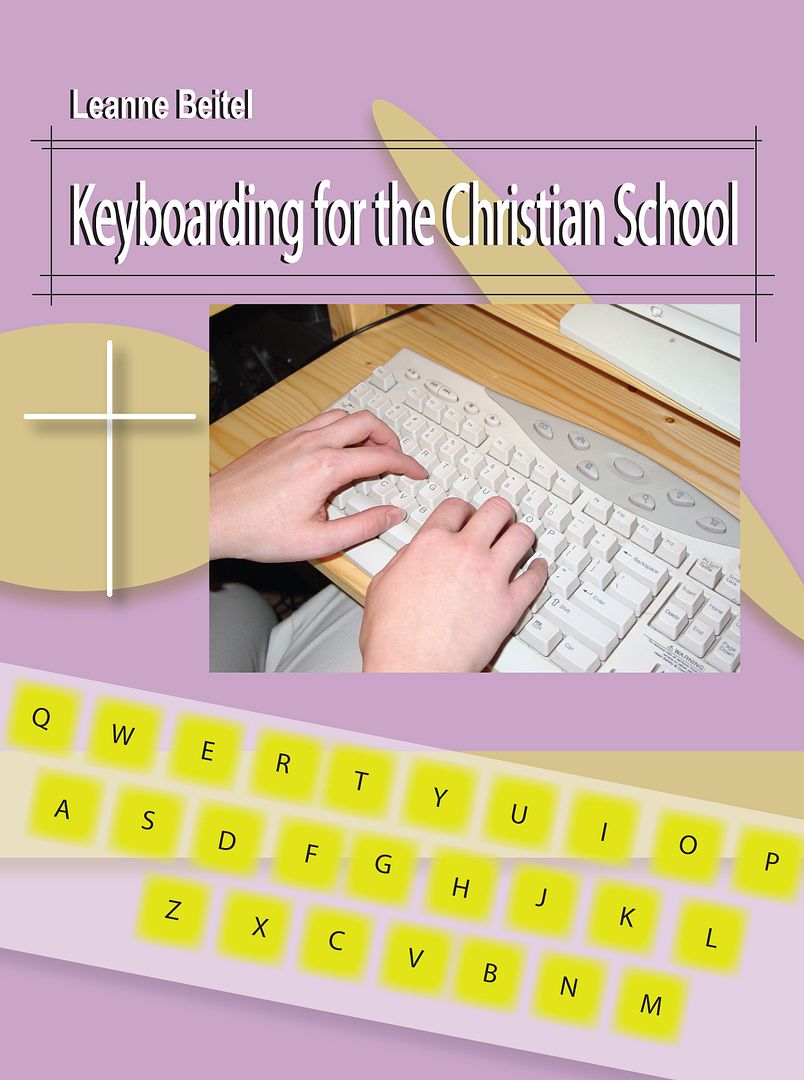
We've half-heartedly used quite a few typing programs in the past, but I decided to go ahead and sign us up to try one more program, called Keyboarding for the Christian School. It is a basic typing course that takes students from the very basics to typing extended portions of scripture, writing business letters, and building tables within 43 lessons.

I've not been overly impressed with typing games, having decided that basic drill is the best way to really master typing. This program is exactly that, a solid and basic drill program.  The introductory lesson instructs students in proper posture and hand positioning. Lesson 2 introduces 2 letters. Lesson 3 introduces another 2 letters and then reviews. Lesson 4 introduces another 2 letters and then reviews all 6 letters learned. This proceeds until all letters are mastered. Lesson 18 introduces the shift keys and then numbers and symbols are learned, lesson by lesson. Lesson 30 teaches students how to center their content on a page and subsequent lessons gradually increase in difficulty as practical applications are introduced.

The program includes everything I learned throughout 2 years of keyboarding classes in high school. It really is more than just a "clunk-clunk-clunk-learn-the-letter-A" sort of program, though it remains very plain and simple.

My oldest son, who has patiently worked with several of these programs I have tried out says that he prefers this one. He likes the level of drill and then review. Because he had previous experience, he was quickly able to work through 5 lessons in about twenty minutes. He is eager to continue the lessons.

Monday, July 16

Professor B

I have some strong ideas about math. Those ideas have developed over many years of watching students learn and watching them apply what they've learned. I've seen the damage from pushing math memorization too early, before math concepts could be grasped. Again and again, I've seen the love of math grow in students that were properly (but not overly) challenged 

And while I know that every student is different, I was pretty settled on what I felt was the best curriculum available. For years, a friend insisted that I give Professor B a try, but I insisted that it was unnecessary. Nothing could compare to my favorite math program. My boys excelled with my curriculum of choice. Well, okay, we did have to stop for a few months and drill in addition. And, yes, we did have to stop again and drill in multiplication. But otherwise, the curriculum was excellent and they soared on to Algebra by the 6th grade. Why would I need to try Professor B? 
But then my girls left me stumped. They enjoyed and understood my curriculum of choice, but it just was NOT sticking in their heads. It wasn't clicking. We gently but consistently trudged onward. I could have pushed memorization and they would have obliged, but I wanted them to "get it". We lingered over lessons, used money and buttons and kept trying to learn it a different way. They understood the concept of adding and subtracting. They even memorized most of the facts on their own, but they still stopped to count fingers. It still hadn't clicked. After several months of this, we tried Professor B's E-Learning program. Wow!

My 8 year old, Honor, learns from videos very well. I haven't figured out if it is visual or auditory for her, but she seems to be able to remember anything she watches on a screen. My 6 year old, Sarah Grace, is more kinetic, and needs to involve some sort of motion to learn. Professor B combines both styles beautifully. Within 10 minutes of online lessons, the girls were smiling over how easy the new lessons were going to be. I began to wonder if I had chosen far beneath their level. They were well past counting to 10. After another 10 minutes, they were feeling the challenge. And ten minutes after that? They were on fire. They were adding images of stars and pandas and balls as quickly as they popped on screen. It was incredible. MY brain was scrambling to add them fast enough and the girls were flying right along, excited and confidant. I was sold. 

Professor B teaches toward mastery of each concept. Again and again, we sit to down to lessons and I am amazed at how quickly the girls grasp and then master a new concept. In one sitting, my girls learned place value into the trillions. One short sitting! Keep in mind that we have gone over place value many times over the past two years. We have used props of all kinds, worksheets galore...Hours invested in it and they were barely slumping along with the idea of ones, tens, and hundreds. But 10 minutes of Professor B and they were accurately reading this number: 900,060,607,084,005. Truly! And many more like it! 

I think there might be some sort of magic associated with this program. I cannot quite grasp what the ingredient is that makes all the difference, but I know that it works. You can read about the History and Philosophy behind Professor B's methods here  You can also watch samples lessons here. Don't be deceived by it's supposed simplicity. It is magic, I assure you. 
There are 3 levels to Professor B's E-learning program. Each level teaches 3 years of math lessons in one year. Each level also includes a PDF workbook to print. These are between 140 to 180 pages long. The levels are as follows: 

LEVEL I - Pre-k though 2nd graders and remediation of older learners. Introduction to Addition/Subtraction Facts - Counting to One Hundred - Lower Addition and Subtraction - Higher Addition and Subtraction - Place Value Fractional Parts; Order - Time - Money
LEVEL II - 3rd grade through 5th grade and remediation of older learners. Multiplication/Division Facts and Problem Solving - Introduction to Fractions - Fractional Equivalence - Addition and Subtraction Fractions
LEVEL III - 6th through 8th grades and remediation of older learners. Multiplication/Division of Fractions - Decimals - Percents


The levels and free placement tests can be found here, but keep in mind that the pricing listed on this link is not yet updated and does not reflect the excellent price drop. The new price for Professor B's E-Learning program includes a package deal of $100 for 3 years access to each level. As they are working to update the site, customers can call  678-765-6655 to place an order and they will honor the new price. 

I am a tightwad through and through. I frequently receive free curricula and have become a snob when it comes to spending money on programs. I don't casually purchase material. Knowing this, please appreciate the value I place on this curriculum when I say that I think it's price is well worth it and that I will happily purchase this program when my free membership runs out so that we can continue this level of mastery. 

And now I have to go tell my friend she was right and I was wrong. 

For more reviews on this fantastic program, be sure to visit The Crew website:

Disclaimer: I received this material in exchange for my honest opinion as a member of the TOS Crew, and received no other form of compensation. For whatever they're worth, the opinions are mine and mine alone, as stated in my disclosure policy.

Tuesday, May 22

Making Math Interesting

Yesterday, I shared my family's favorite online math drills. For extra reinforcement that does not include computer games. These interactive activities really seem to solidify math facts, helping students to visualize how math works rather than just memorize facts.  I'm of the mindset that math doesn't need help being interesting; it's a beautiful part of God's creation. Often, we can point this out in nature and sit back in awe of the mathematical beauty of the world around us. Don't believe me? Do a google image search for the fibonacci sequence and I bet you'll agree.

My kids will often agree that math itself is beautiful, but the daily drill isn't always so appealing. If yours agree, here are some engaging activities to inspire some fun learning:

The Positive Engagement Project is a non profit organization that shares lots of free pdf downloads.
What the Teacher Wants shares some math activities for the kinetic learner.

Absolutely LOADS of great addition games at First Grade Schoolbox.

Domino Math PDF from Confessions of a Homeschooler.

For a fun way to practice telling time, One Extra Degree shares the idea to use a hula hoop for a blank clock. This could also be done outside with sidewalk chalk.

Also for telling time, Mrs. Nielson shares a fun technique:


I found lots of fun ideas for reinforcing the basics over at Serenade to Second Grade:

One of the best techniques for memorizing addition facts is to practice skip counting. Here are some skip counting activities shared from First Grade Parade.

This one is so simple it seems silly, but sometimes those simple things are the most incredible ideas. Old Shoe Woman shared a picture of a great tool for studying place value and expanded form:

More Place Value activities at Kindergarten Crayons

Also from First Grade Parade, some fraction fun:

I Speak Math has lots of great helps that integrate technology. For math vocabulary, a poster:


A crazy-awesome shortcut for Long Division at The Math Page:

For Geography, have some fun with tape graffiti:

For a twist on Prime Factorization, visit Math in the Middle:

The good old standby, worksheets, are still just as effective as ever.


My absolute favorite way to reinforce basic math skills is to use a morning board. Morning boards are just basic bulletin boards/poster boards that we spend five minutes on every morning to start our day. We go over the calendar, the days of the week. We count school days. We skip count. We add money. We also go over artists, poems, and basics like our address, phone number, etc. Here is Joyfully Domestic's fun example. Do a search for morning boards and you'll find lots of great ideas and free templates to help you create your own.

The more we stress about them learning math, the more difficult we make it for them to learn math. They will learn those basics before college. I promise! The child who struggles with fact families in 2nd grade can still go on to excel in calculus later. Or perhaps he'll be the child who has little need for math and is content to stop after algebra. Regardless, he has many years to get there and plenty of time to enjoy learning.


Related Posts Plugin for WordPress, Blogger...